Jonah Naplan July 16, 2026
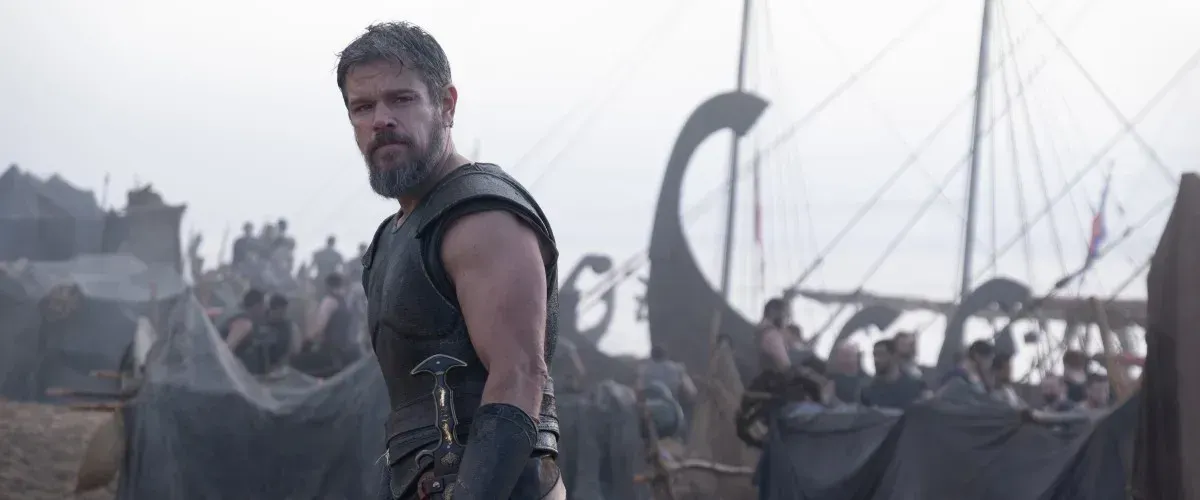
Towards the beginning of “The Odyssey,” the newest colossal project from signature epic-maker Christopher Nolan, a character challenges Odysseus (Matt Damon) on his ethical code; before ever shooting his bow, he always gives it a graceful pluck, signaling to prey that he’s coming and that they have a chance to run. The interrogator doesn’t understand the reasoning, yet such morality highlights what makes “The Odyssey” stand out as much more than just a marvel of massive setpieces and groundbreaking practical effects—there’s a tangible humanity that lurks underneath all the grandiosity. He could easily sneak up and take his shot fair and square, but would that not be the insatiable wrath of man causing even greater destruction and reaping even more casualties?
Such questions are explored throughout this monumental adaptation of Homer’s indispensable long-form poem, which will surely be remembered by this generation of literature and film fans alike as the definitive one. And yet, for all its impressive spectacle, the subtle moments in Nolan’s versatile script may be remembered the most. Seeing the movie as the auteur intended, on the largest screen possible, may actually better enable you to pick up on what brilliant acting so much of the incredible ensemble is doing with their faces, as they’re confronted with unimaginable horrors and grapple with searing loss that sometimes isn’t their fault, but also sometimes is.
The basic premise, likely streamlined for modern audiences, but not so much that Nolan would lose his sophisticated mode of storytelling, follows Odysseus and his crew as they make the perilous trek home in the aftermath of the Trojan War. The King of Ithaca has been gone for so long that he’s never met his grown son Telemachus (Tom Holland), brought into the world by his wife Penelope (Anne Hathaway), who holds out hope that they’ll one day reunite despite the odds. In the meantime, the Queen spends her waning days confined to the palace as a brash menagerie of suitors takes over the halls, pining for a chance to assume the throne. Among these is the malevolent Antinous (Robert Pattinson), whose heady ego and vicious schemes render him a credible threat to the kingdom. If he and Telemachus butt heads, it’s because of their polar opposite views of the future of Ithaca; one believes the true savior will return and restore peace to the land, while the other believes they are the savior and that the ruinous and authoritarian ruse they abide by is their own version of prosperity.
In classic Nolan fashion, “The Odyssey” still finds a way to play with time, often intercutting between multiple different stories at once. The director recycles the formula he invented for the Best Picture-winning “Oppenheimer,” which nestles a brisk quasi-montage in the first hour to establish the major characters and time period. As we follow Odysseus’s journey back home, crossing paths with a variety of memorable, if otherwise deadly, characters along the way, the movie regularly cuts back to Telemachus’s personal road to discovery as more gets revealed about his enigmatic father. Menelaus (Jon Bernthal), the King of Sparta as well as Odysseus’s former comrade, is able to provide a firsthand account of what it was like bunkering down in the seminal Trojan Horse, breathing in the sweat, vomit, and waste for days as the soldiers stalled on the beach. In a movie so big, the claustrophobia of this flashback is felt in strikingly equal measure.
The destruction suffered at Troy is the centerpiece of the movie, but Nolan doesn’t show the scene in full until the very end, when we can take what we’ve learned about the characters involved across the entire runtime and place it within the context of the operation itself and the implications of its aftermath. The beauty of his screenplay (which was inspired by the 2017 translation by Emily Wilson, notably the first woman to publish one) is that it finds interesting new ways to tell a story that’s already been adapted and reimagined ad nauseam both on the page and screen. In how many prior iterations have we already seen Circe (Samantha Morton) teach Odysseus and his men a lesson about greed vs. discipline and the destructive capabilities of their primal impulses by physically shaping them into the pigs they are? Nolan finds a riveting new way to portray it, fusing body horror and surrealism in a stomach-churning stew, all without using CGI.
It would be fair to criticize Nolan for only using practical effects if the results were lackluster, but they are not. Curiously reminiscent of the fantasy work of Guillermo del Toro, one of the greatest feats of “The Odyssey” is the way it’s able to masterfully thread the needle between make-believe and reality. The Cyclops feels just authentic enough to be taken seriously, but not to such an extreme that we’re afraid to crack a knowing chuckle at its construction. When Oscar season comes around, what’s likely to go overlooked about “The Odyssey” is just how much it’s balancing, tonally and thematically. In one minute, it’s a soaring dreamscape of action/adventure mania; in another, it’s a character drama about guilt and responsibility; in another, it’s the surest promise yet that Nolan may finally deliver on that horror movie he’s been wanting to make one day.
The best sequences in “The Odyssey” are separate from the most impressive. The latter category will floor you with its technical composition, particularly anything involving big monsters or hundreds of extras who are just unquestionably part of this world. What elevates “The Odyssey” beyond being just a visual phenomenon, though, is all the rich subtext that lurks underneath, linking it to otherwise completely unrelated films in the director’s filmography. The most notable has got to be “Oppenheimer,” of which it strikes entirely different structural parallels in the beginning, than it does thematic ones at the end. Nolan has talked extensively about how the commercial success of his 2023 box office smash hit (which certainly couldn’t have been hurt by its double-feature billing with “Barbie”), allowed him complete creative freedom with his next project. And yet, he’s still chosen to make a cautionary spiritual sequel about how the ambition of one man ultimately led to more guilt than pride as he grappled with the devastating consequences of his brilliance. But though “The Odyssey” doesn’t become frank about its “All Quiet on the Western Front” sensibilities until the very end, that’s only because Nolan wants you to search for it throughout the rest of the runtime. He’s already given you hints at where he’s aiming for; Zendaya’s recurring character is essentially the physical manifestation of Odysseus’s Trojan War guilt, while Calypso (Charlize Theron) represents the validation and security he reaches for in spite of it, offering him lotus flowers, which were Homer’s way of warning about psychedelics long before Aldous Huxley invented soma.
Through Travis Scott’s storyteller who appears at the beginning of the movie, “The Odyssey” also interrogates the stories we tell ourselves, originally passed down by our ancestors and mentors but meant for us to share with our own children. Depending on the teller, the heroes we regard as “gods” may not seem as such anymore once we learn of their true motives or hear from another perspective. The film’s willingness to live in a morally gray area, never taking the side of anybody, and letting the viewer decide how to feel once it has given us the facts, is one of its greatest strengths.
This is a special kind of movie where everybody was on the same page about the colossal task at hand, and worked at the height of their abilities to produce the optimal result. Damon is expectedly terrific in a film that sometimes feels like a one-man show as he grapples with his legacy and regrets, but the larger ensemble is what really makes “The Odyssey” sing, from Hathaway to Pattinson, to Theron and Holland, to John Leguizamo as Eumaeus, Lupita Nyong’o as both Helen of Troy and her sister Clytemnestra, and Benny Safdie as Agamemnon, whose tragic fate haunts Odysseus along his journey. Regular Nolan collaborators like cinematographer Hoyte van Hoytema, editor Jennifer Lame, and composer Ludwig Göransson all return to work their magic and make these immersive three hours fly by. Every second of the first movie “shot entirely with IMAX film cameras” elicits an incomparable sensation.
It would be lazy to say that “they just don’t make ‘em like this anymore,” when there’s a third “Dune” adventure coming out in December. But very few movies these days seem to be designed solely for movie theaters, without a single thought about adjusting for smaller screens. “The Odyssey” is larger-than-life the same way films like “The Ten Commandments” and “Ben-Hur” used to be during the “New Hollywood” era, a go-for-broke period when studios started to realize that the advent of television would make for a greater industry shock than they were expecting and needed to create products that would appeal to people to return to the big screen. With this film, Nolan seems to be operating under a similar assertion—the best way to keep these beloved establishments alive is to create works of astonishing art that can’t be better experienced anywhere else.
Now playing in theaters.